
By M BiswaRanjan, Senior Editor ,
 The consulting industry is undergoing a quiet but consequential transformation. Across geographies — from the gleaming towers of Dubai to the financial corridors of Mumbai and the innovation hubs of Singapore — a diverse ecosystem of consulting firms is rewriting the rules of business advisory.
Whether it is Indian entrepreneurs carving out a niche in the UAE, labour consultants keeping pace with rapidly evolving workforce regulations, or storied multinationals like McKinsey, BCG, and TCS steering corporations through digital disruption, the message is consistent: the age of the generalist advisor is giving way to a new era of specialised, culturally intelligent, and tech-enabled consulting.
Few stories in the contemporary consulting landscape are as compelling as the rise of Indian-founded consulting firms in the United Arab Emirates. In a market that has long attracted global talent, Indian entrepreneurs have emerged as a particularly potent force—not merely because of their technical expertise but because of a rare combination of qualities that sets them apart: a deep familiarity with both Indian and Emirati business cultures, an ability to navigate complex regulatory environments, and a track record of building enterprises that scale.
The UAE's ambition to remain a global business hub has generated intense demand for specialized advisory services across management consulting, financial advisory, IT solutions, and human resource management. Indian consultants have stepped into this space with confidence, offering what many Western firms have struggled to provide: culturally nuanced, cost-effective, and practically grounded guidance for businesses seeking to establish or expand their presence in the Gulf.
Indian founders in the UAE are not simply transplanting models from the subcontinent. They are building hybrid advisory practices that draw on the best of both worlds—the rigor and analytical depth of global consulting methodology combined with the agility and contextual intelligence that comes from lived experience in emerging markets. This approach has proven particularly effective in sectors where regulatory complexity and cultural sensitivity intersect, including real estate, healthcare, digital marketing, and financial services.
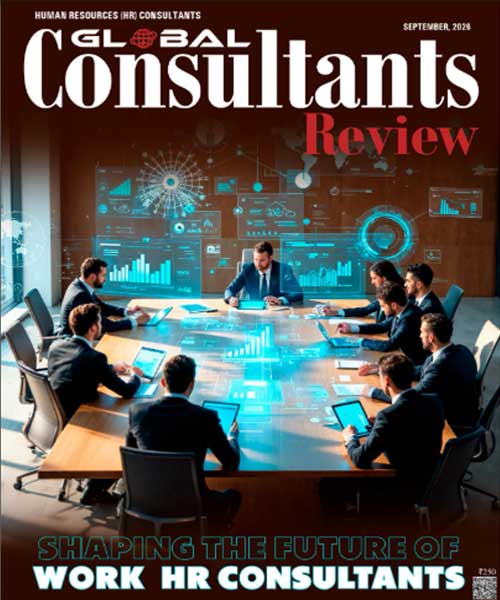
While the glamour of management consulting and digital transformation advisory tends to dominate headlines, a quieter revolution is underway in labour consulting — a discipline that has never been more consequential than it is today. As businesses grapple with hybrid work models, cross-border employment, evolving labour laws, and heightened employee expectations, the role of the labour consultant has expanded dramatically.
Labour consultants today are far more than compliance officers in suits. They are strategic advisors who help organisations design fair, productive, and legally sound workplaces. Their expertise spans employee relations, recruitment strategy, HR policy development, and dispute resolution. In an era when a single regulatory misstep can result in costly litigation or reputational damage, companies are increasingly turning to specialist labour consultants not as a last resort, but as a proactive investment in organizational health.
The intersection of labour consulting and digital transformation is particularly fertile ground. As automation reshapes job functions and remote work dissolves traditional employment boundaries, organizations need advisors who understand both the human and the legal dimensions of workforce change. Labour consultants who can bridge these worlds—combining deep knowledge of employment law with an understanding of organizational psychology and digital tools—are among the most sought-after professionals in the market today.
Ajay Kaushik, Founder and CEO of Panacea Infosec, who contributed to both the October and January–February issues, brought an important adjacent perspective: the growing threat of synthetic identity fraud and cybercrime in the modern workplace. "Synthetic identity fraud is a sophisticated crime of the new millennium," Kaushik observed, noting that businesses must treat cybersecurity not as a peripheral IT concern but as a core element of their risk and compliance strategy. His insight underscores a broader trend: the most effective consultants today operate at the intersection of multiple disciplines, bringing integrated perspectives to problems that resist siloed solutions.

The recognition of R&D consultants reflects a growing acknowledgement that innovation is no longer the exclusive domain of technology companies. Across industries—from manufacturing and pharmaceuticals to financial services and education—businesses are recognizing that sustained competitive advantage requires a systematic approach to research, experimentation, and knowledge creation.
R&D consultants play a critical role in helping organizations build this capacity. They help businesses design innovation frameworks, identify funding opportunities, navigate intellectual property considerations, and translate research findings into commercially viable products and services. As governments across Asia, the Middle East, and beyond increase their investment in innovation ecosystems, the demand for skilled R&D advisories is set to grow substantially.
Soumya Das, Director at Rudrabhishek Infosystem, contributed a timely analysis of Building Information Modelling (BIM) in the architecture, engineering, and construction sector, illustrating how specialized technical consulting is transforming even traditionally conservative industries. "The advancing impact of BIM in the AEC industry is most visible in large-scale projects," Das noted, pointing to the way digital modeling tools are enabling consultants to deliver faster, more accurate, and more cost-effective outcomes for clients.
Against this backdrop of emerging specialists and regional innovators, the world's largest consulting firms continue to set the standard for scale, capability breadth, and global reach. What is striking about this cohort is the diversity of their strengths.
BCG and McKinsey bring unmatched depth in strategy and management consulting, helping corporations and governments navigate their most complex strategic challenges. EY and KPMG offer integrated advisory, assurance, and tax services that have become indispensable to multinational corporations operating across multiple jurisdictions.
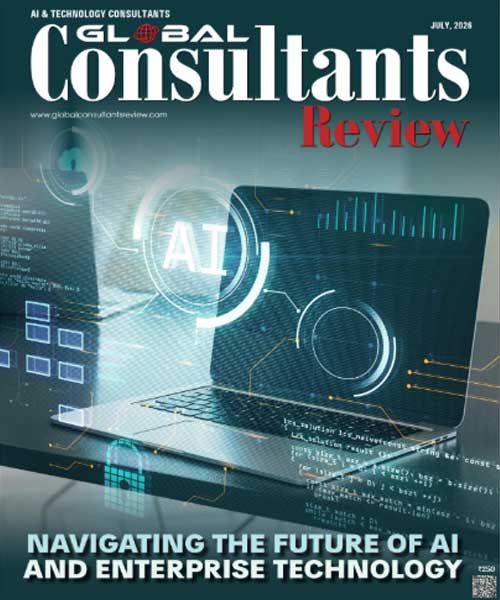
Capgemini and Infosys represent the technology consulting vanguard, delivering AI-powered, cloud-native, and digitally integrated solutions that are reshaping how businesses operate. TCS, with its global delivery model and deep partnerships with major corporations worldwide, exemplifies the new generation of IT-led consulting that blends technical excellence with business acumen.
Oliver Wyman stands out for its distinctive integration of industry expertise with specialized capabilities in strategy, operations, risk management, and organizational change—a model that has proven particularly effective in financial services, healthcare, and transportation. Bain & Company's focus on customer strategy, private equity, and performance improvement has made it a trusted partner for organizations navigating high-stakes transformation.
As the Global Consultants Review noted in its profile of the international consulting landscape, "Consultants don't just offer solutions; they cultivate a culture of continuous improvement." This maxim captures something essential about the value proposition of the best consulting firms—they do not simply solve today's problem but equip organizations with the tools, capabilities, and mindset to solve tomorrow's.
Two themes recur across previous issues of Global Consultants Review under review: digital transformation and sustainable development. These are not coincidental preoccupations. They reflect the twin imperatives that are reshaping business strategy across every sector and geography.
On the digital side, contributors including Husain Habib of Hats-Off Digital and Neha Kulwal of Admitad India explored the evolving landscape of digital marketing and content strategy, highlighting how brands must evolve their communication approaches to engage a new generation of consumers. Ranga Jagannath of Agora brought a practical perspective on cloud communication tools for small businesses, emphasizing the democratizing potential of technology that was once available only to large enterprises.
On the sustainability front, Shabbhir Kanchwala, Senior VP at K Raheja Corp, made a compelling case for sustainable development as the defining business imperative of the coming decades. "Sustainable development is the way for the future," Kanchwala argued—a view that is rapidly moving from aspiration to operational reality as regulatory frameworks, investor expectations, and consumer preferences converge around ESG principles.
Meanwhile, Saroj Topno Mittra of Margdarshak highlighted the importance of inclusive digital finance—a reminder that the consulting industry's contribution to social progress extends well beyond the boardroom. Consultants who help financial institutions design inclusive products and services are playing a direct role in expanding economic opportunity for underserved communities across South Asia and beyond.
The consulting industry—in all its diversity, from boutique labour advisory firms in Mumbai to global strategy powerhouses in New York and London—has never been more relevant than it is today. The challenges facing businesses and governments are unprecedented in their complexity: technological disruption, regulatory proliferation, geopolitical uncertainty, workforce transformation, and the urgent imperative of sustainability.
Against this backdrop, the consultants profiled across these three editions of Global Consultants Review—whether Indian founders building practices in the UAE, labour specialists navigating workforce compliance in India, or global firms deploying AI and digital tools at scale—share a common purpose: to bring clarity, capability, and confidence to organizations navigating an uncertain world.
The future belongs to those consulting firms that can combine deep expertise with cultural intelligence, technological capability with human judgment, and global perspective with local insight. If the talent and ambition on display in these pages are any indication, that future is already taking shape.
We use cookies to ensure you get the best experience on our website. Read more...