By Global Consultants Review Team
 For decades, consulting was defined by scale. Large teams, long timelines, and expansive slide decks became the industry’s signature. Size conveyed credibility, and complexity justified cost. But the forces reshaping business today, accelerating technology, sharper accountability, and increasingly sophisticated clients, are quietly dismantling that model. The next era of consulting will not be louder or larger. It will be smaller in structure, smarter in execution, and deeper in impact.
This shift is not a temporary adjustment to market pressure; it is a structural evolution. As organizations demand outcomes over activity and insight over information, consulting is being redefined at its core.
The End of Scale as a Proxy for Value
For much of its history, consulting relied on leverage. Senior partners sold the vision, and armies of junior consultants delivered the work. This model thrived when information was scarce, benchmarking was difficult, and clients needed external validation to make decisions. Today, those conditions no longer exist.
Data is abundant, industry insights are widely accessible, and clients often arrive with a clearer understanding of their challenges than consultants did a generation ago. What they lack is not information but clarity, judgment, and executional precision. Large teams, once seen as a strength, now risk slowing decision-making and diluting accountability.
As a result, clients are increasingly skeptical of bloated engagement structures. They are asking a sharper question: who is actually doing the thinking? Smaller teams with senior expertise are proving more effective than layered pyramids. When fewer people are involved, responsibility becomes clearer, communication tightens, and insights move faster from analysis to action.
The future consulting firm will therefore be intentionally lean. Not understaffed, but precisely staffed. Scale will no longer signal value; relevance will.
Smarter Consulting in an AI-First World
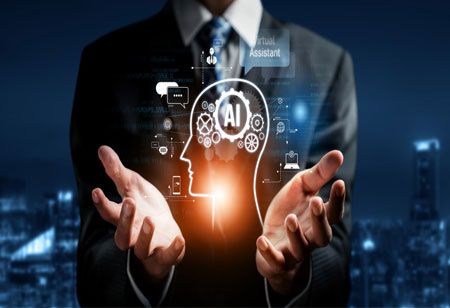
The rise of artificial intelligence is accelerating this transformation. Tasks that once consumed weeks of consultant time, data gathering, financial modeling, scenario analysis, even competitive benchmarking, can now be completed in hours. This does not diminish the role of consultants; it raises the bar for what they must contribute.
In an AI-enabled environment, being smart is no longer about processing power. It is about framing the right questions, interpreting insights within context, and making sound judgments under uncertainty. Technology handles the “what,” but clients need human expertise for the “so what” and “now what.”
This shift rewards consultants who combine domain depth with systems thinking. Strategy can no longer be separated from technology, culture, or execution. A recommendation that ignores operational realities or human behavior quickly collapses, no matter how elegant the analysis.
Smarter consulting also means continuous learning. As industries evolve faster and business models blur across sectors, consultants must stay close to the front lines of change. Static frameworks and recycled slides lose relevance. What matters is the ability to synthesize emerging signals and translate them into decisions that leaders can act on immediately.
In this world, intelligence is measured not by the thickness of the deck, but by the clarity of direction it provides.
Depth Over Breadth: The New Differentiator
As consulting becomes smaller and smarter, it must also become deeper. Generalist advice, once sufficient, is no longer enough. Clients are grappling with complex, high-stakes challenges: digital transformation, regulatory shifts, climate risk, talent scarcity, and geopolitical uncertainty. These issues demand more than surface-level expertise.
Depth manifests in several ways. It starts with industry immersion. Consultants who truly understand sector dynamics - its economics, constraints, and unspoken realities, are able to challenge assumptions and identify opportunities others miss. It extends to functional mastery, where advice is grounded in firsthand experience rather than theoretical models.
Depth also shows up in relationships. The next era of consulting is less transactional and more trustbased. Clients want advisors who are willing to stay with the problem, not just define it. This requires emotional intelligence, courage to deliver uncomfortable truths, and the humility to co-create solutions rather than impose them.
Importantly, depth shifts the focus from short-term engagements to long-term impact. Success is not measured by hours billed, but by outcomes sustained. Consultants who go deep are invested in what happens after the final presentation, because their credibility depends on real-world results.
From Advice to Accountability
Perhaps the most defining change in consulting’s next era is the move from advice to accountability. As business leaders face increasing scrutiny - from boards, regulators, and stakeholders, they expect the same level of responsibility from their advisors.
This does not mean consultants will run companies, but it does mean they will stand behind their recommendations more visibly. The best consultants will help design execution pathways, define success metrics, and remain engaged through critical phases of implementation. They will be judged not just on insight, but on impact.
This evolution favors firms and individuals who are confident enough to say no - to unnecessary work, to misaligned objectives, to solutions that look good on paper but fail in practice. Smaller, smarter, and deeper consulting models create the conditions for this honesty. When expertise is concentrated and relationships are strong, trust replaces theatrics.
The future of consulting is therefore not about doing more, but about doing what matters. It is about precision over volume, insight over noise, and partnership over performance. In a world that is increasingly complex, the consultants who thrive will not be those who bring the biggest teams, but those who bring the clearest thinking and the deepest commitment to results.
We use cookies to ensure you get the best experience on our website. Read more...