
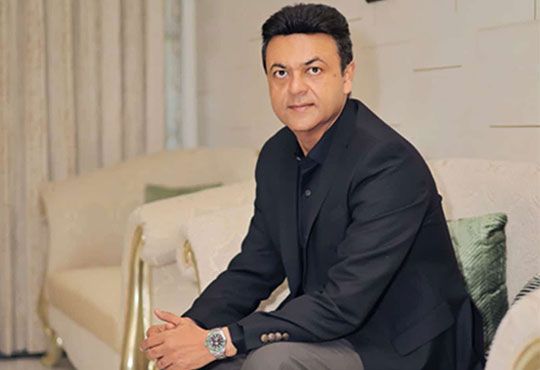
By Mr Nitin Kaushal, Managing Director, SFK Group of Companies
The industrial landscape is undergoing a fundamental transformation driven by rapid technological advancements, evolving customer expectations, sustainability imperatives, and the growing need for operational resilience. Across manufacturing and infrastructure sectors, organisations increasingly recognise that long-term competitiveness depends not only on adopting advanced technologies but also on building adaptable systems, nurturing capable teams, and fostering a culture of continuous improvement.
With more than two decades in industrial technology, automation, engineering, and business leadership, Mr. Nitin Kaushal has seen this evolution firsthand. His professional journey reflects the shift from conventional operational models to connected, data-driven, and technology-enabled industrial ecosystems.
According to Mr. Kaushal, the future of industrial growth will be defined by an organisation's ability to combine technological innovation with disciplined execution. While technologies such as artificial intelligence, industrial automation, the Internet of Things (IoT), and advanced analytics continue to unlock new possibilities, their real value lies in how effectively they are integrated into business processes and strategic decision-making.
Industrial automation has evolved beyond being a productivity tool; it has become a strategic capability that enables organisations to improve efficiency, enhance product quality, minimise downtime, and respond quickly to changing market demands. Combined with real-time monitoring and intelligent analytics, automation empowers businesses to make informed decisions based on accurate operational insights.
Mr. Kaushal believes that Industry 4.0 represents far more than a technological upgrade—it signifies a fundamental transformation in the way organisations operate. Successful digital transformation requires a balanced alignment of technology, people, and processes. Organisations that focus solely on deploying new tools without strengthening internal capabilities often struggle to realise sustainable business outcomes.
Artificial intelligence is also reshaping industrial operations through predictive maintenance, process optimisation, quality assurance, and resource management. However, Mr. Kaushal emphasises that AI should be viewed as a business enabler rather than a standalone solution. Organisations must clearly define business objectives before implementing AI-driven initiatives to maximise long-term value.
As technology continues to evolve, leadership must evolve alongside it. Today's leaders are expected not only to manage change but to build organisations that are resilient, agile, and capable of continuous learning.
Mr. Kaushal believes that effective leadership is rooted in accountability, transparency, discipline, and a commitment to continuous improvement. Sustainable organisational success is achieved when leaders empower teams, encourage ownership, and create an environment where collaboration and innovation thrive.
Building strong, cross-functional teams has become increasingly important as industrial operations become more complex. Organisations benefit when technical expertise, business strategy, and operational excellence work together towards common objectives.
Equally important is fostering a culture of lifelong learning. As emerging technologies rapidly reshape industries, continuous skill development enables employees to adapt confidently while helping organisations remain competitive in an evolving marketplace.
Sustainability has become an integral part of industrial strategy rather than merely a regulatory requirement. Businesses today increasingly recognise that responsible environmental practices contribute to long-term operational resilience, business continuity, and stakeholder confidence.
Industries are investing in cleaner technologies, environmental monitoring systems, efficient resource utilisation, waste management, and sustainable infrastructure to reduce their environmental impact while maintaining operational excellence.
Mr. Kaushal believes that industrial growth and sustainability should complement each other rather than compete. Modern technologies provide industries with opportunities to improve productivity while simultaneously reducing environmental footprints and strengthening compliance.
Achieving meaningful sustainability outcomes requires collaboration among industry, technology providers, policymakers, and academia. Organisations that proactively integrate sustainability into their strategic planning will be better positioned to meet future regulatory expectations and evolving market demands.
India's manufacturing and infrastructure sectors are entering a transformative phase supported by digitalisation, policy reforms, and increasing emphasis on self-reliance. This presents significant opportunities for organisations willing to embrace innovation while strengthening execution capabilities.
According to Mr. Kaushal, building a globally competitive industrial ecosystem requires a combination of engineering excellence, technological innovation, skilled talent, and disciplined operational execution. Businesses must continuously improve processes while investing in technologies that enhance productivity, efficiency, and competitiveness.
The success of Industry 4.0 in India will depend on the widespread adoption of digital technologies across organisations of every scale. While larger enterprises often lead technological transformation, small and medium-sized businesses also require access to scalable and affordable solutions that support their digital journeys.
Greater collaboration among industry, academia, policymakers, and technology innovators will play a crucial role in developing the skilled workforce needed to support India's next phase of industrial growth.
The coming decade will redefine industries through automation, artificial intelligence, sustainability, and digital connectivity. Organisations that embrace these changes strategically will be better positioned to navigate future challenges and opportunities.
Mr. Kaushal believes that businesses should focus on building long-term resilience instead of pursuing short-term gains. Future-ready organisations will be characterised by robust systems, empowered people, disciplined execution, and a culture that embraces continuous innovation.
Leadership will remain central to this transformation. Successful leaders must balance technological advancement with human capability, ensuring that innovation creates meaningful value for businesses, employees, customers, and society.
As industries continue to evolve, adaptability will become one of the most valuable competitive advantages. Organisations that combine technology, responsible leadership, operational excellence, and sustainable practices will play a significant role in shaping a more resilient, efficient, and globally competitive industrial ecosystem.
Drawing on his extensive experience in industrial technology and organisational transformation, Mr. Nitin Kaushal continues to advocate a balanced approach where innovation, engineering excellence, disciplined execution, and responsible growth work together to shape the future of industry.
We use cookies to ensure you get the best experience on our website. Read more...