

By Tanuja NU
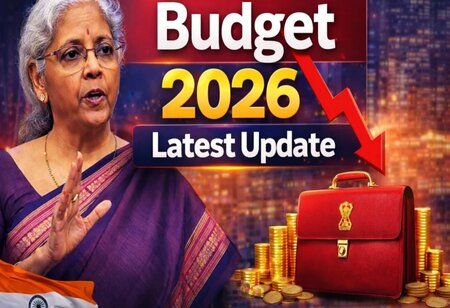 The anticipation is palpable as India prepares to present the Union Budget 2026–27, with activity flowing from the corporate world through factories to the households of the working class and the start-up ecosystem. The new Budget is coming at a historic juncture, which has been marked with unstable global scenario, changing trade partnerships, and fears of protectionism in some of the markets being discussed. In this new reality, local companies are asking for government support in terms of marketing, stability, and momentum-sustaining policies, shaping wider Budget 2026 expectations India is witnessing
Expectations with Finance Minister Nirmala Sitharaman's ninth consecutive Budget to be presented on 1 February go beyond the usual fiscal announcements, reflecting broader Union Budget 2026 Expectations across sectors. The stakeholders are keenly on the lookout for the government measures that will not only speed up labour creation but also fortify consumption, and thus, India’s growth story, all while maintaining public finances along a strict path. The Budget is also perceived as one of the significant markers in moving forward the long-term Viksit Bharat 2047 (Developed India 2047) roadmap, which represents a focus on resilience, competitiveness, and inclusive development.
The government’s support for the wishes of people will be from various sectors like infrastructure, manufacturing, and digital finance, among others, plus the green transition, MSME support, and employment-led reforms. As the authorities interface with the contesting priorities, Budget 2026 is an indication of the government’s capacity to cleverly combine reform, relief, and responsibility in a fluctuating global economy.
Budget 2026 Expectations: Important Dates and Parliament Schedule
Union Finance Minister Nirmala Sitharaman is going to present the Union Budget on February 1, the date that has been officially confirmed by Lok Sabha Speaker Om Birla, thus putting an end to the speculation. This presentation will be her ninth Budget in Parliament. The Budget Session will start on January 28, 2026, after receiving presidential consent for the sitting of both Houses. The session will be held in two phases and will last till April 2, starting with the President's address to a joint sitting of Parliament.
Market Open on Budget Day Sunday
February 1 will be a working Sunday for market players as BSE and NSE keep trading going during the Union Budget presentation. Pre-open trading will be from 9:00–9:08 am, after those regular sessions till 3:30 pm. The equity, F&O, and commodity segments will be open, marking a rare Sunday Budget Day.
Supporting the MSME and Startup Ecosystem
With the anticipation mounting for Budget 2026, various industry players are asking the government to strengthen its backing for MSMEs and startups by providing them with easier, more transparent access to capital with the help of simplified, non-collateralized lending and strong credit guarantees. The recent policies still cannot remove challenges such as high interest rates, slow approvals, and heavy compliance. It is believed that besides lifting regulations, enhancing export credit, speeding up refunds, and widening the access to incentives, all would make the country more competitive globally.
Growth with Fiscal Prudence
Fiscal prudence coupled with growth will be one of the main themes around which the Union Budget 2026-27 will revolve, the government being the one to decide the extent of capital investment to be sustained along with medium-term consolidation. As per ICRA, this Budget will hold a significant place as it will be in line with the 16th Finance Commission's recommendations which will determine the Centre–state fiscal transfers for the next five years. The fiscal deficit is expected to be at around 4.3 per cent of GDP in 2026-27, which is a marginal reduction from the previous year, with the backing of a strong nominal GDP growth of nearly 9.8 per cent.
Following this path, the Centre will likely witness its debt-to-GDP ratio reducing to about 55.1 per cent. The deficit will be rising in absolute terms, however, because of the very aggressive push in capital expenditure where a 14 per cent increase to Rs 13.1 trillion is expected. It is believed that infrastructure spending increase will be, among others, the most important factor in maintaining the country's economic growth 2026 India in the long run without hurting the government's finances.
Economic Growth & Macroeconomic Priorities
Increasingly, India is seen as a country with a strong growth perspective, even though it still has to deal with global challenges, strengthening confidence in India economic recovery 2026. This is mainly due to strong domestic demand, slow but sure rural recovery and steady manufacturing activity. The assessments and forecasts from the RBI suggest that the economic momentum will be persistent, with the GDP growth for FY 2026 estimated at about 7.3 percent, reinforcing the growth forecast Budget 2026 narrative. The positive outlook is further backed by independent studies such as the ET-PwC, which claim that growth will be in the 6.5-7 percent range, and this is seen as a reflection of the corporate leaders’ enduring confidence.
In this scenario, the Budget 2026 is expected to be focused on the growth quality enhancement along with the growth sustaining, highlighting the link between Budget 2026 and GDP growth. The requirement is for policymakers to consider inclusive, job-generating growth as their priority rather than the headline GDP figures. Economists and industry groups are also advocating for fiscal discipline to be maintained, so that the fiscal deficit can be brought down gradually, while at the same time, encouraging strategic capital spending in areas like infrastructure, technology, and defense, which will attract private investment and elevate the long-term productive capacity of the economy.
Job Creation, Skills & Labour Markets
As millions of people join the labour force every year, the creation of new jobs is anticipated to be the main point of interest for Budget 2026; however, the quality and sustainability of employment will be given more importance. The stakeholders are not only considering the number of jobs created but also looking for stronger formalisation, wider coverage of social security, and incentives for firms to expand their hiring. Industry leaders argue that labour reforms, skill development, and better access to credit for MSMEs would lead to the creation of better jobs. The budget, however, is also expected to promote skilling in future-oriented industries such as AI, digital technologies, advanced manufacturing, and renewable energy, as well as support for R&D and technology talent pipelines that would help extract high-value jobs from India.
Tax Relief, Consumption & Household Spending
Household consumption is still the main contributor to economic activity; thus, a tax relief is the primary expectation from Budget 2026, underlining key Budget 2026 income tax expectations. Tax reform for middle-class taxpayers is regarded as the main source of increasing disposable incomes and consumption. Along with that, the housing, healthcare and insurance sectors are also being watched for consumer incentives which can, in turn, help to reduce costs, support spending, and maintain demand-induced employment in services and retail sectors.
Innovation, Digital Economy & the Future of Work
Amongst the digital public infrastructure of India, UPI, Aadhaar, and DigiLocker are the platforms that power the economy and employment the most. The digital economy has a significant part in the GDP and is the second greatest creator of jobs already, and furthermore, very strong in its growth potential. The incentives for AI and digital adoption, along with the support for cloud, fintech, and platform-based ecosystems that can drive productivity and create new employment opportunities, are some of the main expectations from Budget 2026.
Structural Reforms and Long-Term Growth
Budget 2026 is anticipated to go beyond short-term fiscal measures, and it would be very much to its credit if it would be thought of as allowing to take place, structural reforms which are ultimately beneficial for long-term growth. High tax transparency and policy stability are the most important factors in developing investor confidence, together with measures such as improving the business environment, luring foreign investment, and making local manufacturers more competitive as well as supporting them with export-led growth.
In conclusion, Budget 2026 has been given much attention as a strategic juggling that intends to keep India’s growth trend but, at the same time, respond to crucial socioeconomic issues. The government is expected to keep the country’s financial health, though it will also be pushing the creation of quality jobs through formalisation, targeted skilling, and specific sectoral incentives. Tax cuts for households and consumption support, empowering MSMEs and startups as the main job creators, and innovating and digital growth are also considered to be among the most important things to do. In the end, Budget 2026’s fate will be determined by how efficiently it combines immediate economic support with a long-term structural vision that translates growth into wider job opportunities and shared prosperity for millions of people in India.
We use cookies to ensure you get the best experience on our website. Read more...





.jpg)